The Ultimate Packing Checklist for Long-Term Digital Nomads
Packing for a fortnight's holiday is a puzzle. Packing for eighteen months across four climates is a design problem. You are trying to cover a wet winter in Tbilisi, a humid week in Chiang Mai and a cold Andean morning with one bag you can carry up three flights of stairs.
Almost every long-term traveller ends up with a similar short list. The differences live in the details: the jacket that works in three seasons, the charger that replaces four, the medical kit that saves a wasted afternoon. Below is the reasoning behind the list, plus a downloadable checklist to print, tick and reuse.
One rule sits above all the others: everything you own, you carry. A kilogram of "just in case" is not a one-off cost — you pay it on every staircase, every cobbled street and every crowded bus for the next year. Pack as though you will walk the last kilometre of every journey, because on some days you will.
Start with the bag, not the contents
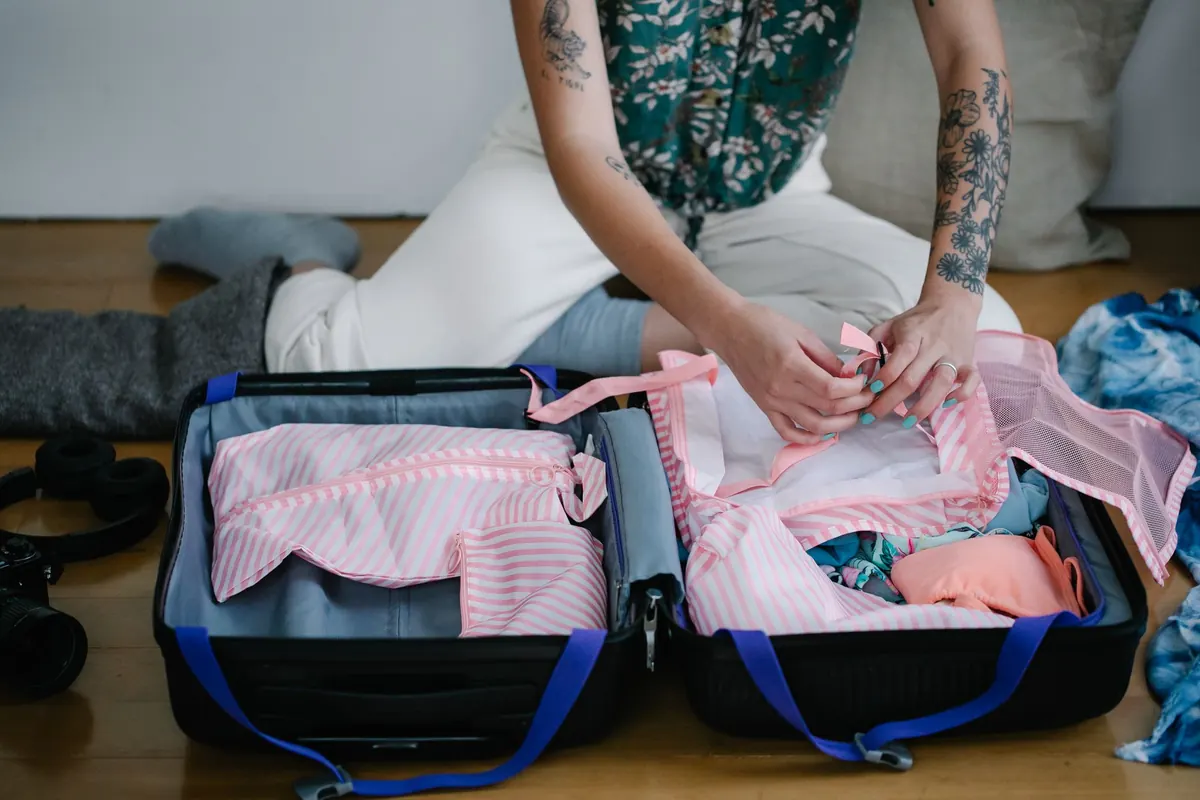
Choose the container before the contents. A 35–45 litre carry-on with a clamshell opening suits most people: enough for a capsule wardrobe and a laptop, small enough to skip the check-in queue. Add a daypack that flattens away and a packable tote for groceries and beach days.
Weigh the empty bag before you buy it. A bag that weighs 2.5kg empty has already stolen 2.5kg of clothing. Look for a real hip belt if you will walk more than ten minutes with it, and check that the laptop sleeve sits against your back, not at the bottom of the load.
Clamshell beats top-loading for a simple reason: you can open it flat on a hostel bunk and see everything at once. Top-loading bags become a lucky dip by week three, and the one item you need is always at the bottom. Zips matter too — a broken zip in Ulaanbaatar is a very different problem from one in Lisbon.
Clothing: build for layers, not occasions
Pack for temperatures, not activities. One merino t-shirt covers a hike, a co-working desk and a decent restaurant, provided the outer layer is right.
- Three or four merino or synthetic t-shirts — quick-drying beats cotton every time
- One long-sleeve base layer and one light fleece or mid-layer
- A packable waterproof shell with a hood
- Two pairs of trousers: one stretchy and hard-wearing, one that passes as smart
- Five to seven sets of underwear and socks, not fourteen
- Swimwear, a sun hat, a warm hat and thin gloves
- One outfit that packs flat and dresses up, for weddings, visa photos and better restaurants
If you would not wear something twice in a week at home, leave it. Laundry is cheap and everywhere; a machine cycle costs far less than the back ache of carrying a fourth jumper.
Think in systems rather than outfits. The same merino tee, fleece and shell that gets you through a 4°C morning in Bogotá also works on a 22°C afternoon in Medellín — you simply lose the fleece. That is the whole trick: three layers, endlessly rearranged, rather than fourteen garments each suited to exactly one climate. Dark colours hide bus-seat grime and laundry-day delays, and a single scarf or bright shirt does the work five extra tops would otherwise do.
Shoes: two pairs, worn and packed
Wear the heavier, more supportive pair on travel days and pack something lighter. Break both in before you fly — blisters in an unfamiliar city are a miserable start.
A third pair tempts almost everyone and satisfies almost no one. If you genuinely need sandals, choose ones that survive a short hike and a decent dinner, and accept that they will smell of the beach by month four.
Tech: what earns its weight
Every cable and lens costs weight, space and one more thing to lose. Test each item with a blunt question: will I use this most weeks?
The core kit
- Laptop and charger, in a sleeve that fits your bag
- Unlocked phone with an eSIM or a local SIM plan
- One multi-port USB-C charger, 65W or more, that fills a laptop, phone and headphones from a single socket
- A compact power strip, so one wall socket becomes four
- Two cables, not six: one long USB-C to USB-C and one short spare
- Noise-cancelling headphones, plus cheap wired earbuds for the flight where the battery dies
- A 10,000mAh power bank small enough that you actually carry it
- An e-reader, if you read more than you scroll
That lot weighs under three kilograms and replaces a small electronics shop. Anything else — the drone, the second lens, the mini tripod — has to justify itself twice, because it will be the thing you resent at security.
If you work from the road, buy your gear before you leave and test it for a month. Warranty claims across borders are slow, and a laptop that fails in month six is a business problem, not an inconvenience. Keep one folder, physical and cloud, with serial numbers and receipts.
What you can buy anywhere
Plug adapters, HDMI cables, phone chargers, umbrellas and towels are sold in every city with an airport. Do not fly them across an ocean. The exceptions are items that fit your body or your prescriptions: glasses, orthotics, contact lenses, specific medication. Those you carry.
The medical kit that pays for itself
Keep it in one small bag that is never raided for anything else, and restock it the week you arrive somewhere with good pharmacies.
- Painkillers, rehydration salts and an anti-diarrhoeal
- Antihistamines and a mild steroid cream for bites and rashes
- Plasters, blister patches, antiseptic wipes and a small roll of tape
- Any prescription medication, in original packaging, with a copy of the prescription
- A digital thermometer and a few rapid tests
Nobody has ever regretted the two hundred grams of a well-stocked medical kit. Plenty of people have regretted the four hours spent finding an open pharmacy at 11pm in a city where they do not speak the language.
Documents, money and the dull essentials
Boring items cause the most expensive problems. Keep a slim folder for paper and a locked cloud folder for scans.
- Passport, plus a second form of ID, stored separately
- Cloud copies of passport, visa, insurance and vaccination records
- Two bank cards from different providers, kept in different places
- A small amount of US dollars or euros for the country that only accepts cash
- Travel insurance details, including the emergency phone number, written down on paper
- A padlock, a few zip ties and a spare passport photo or two
Paper still works when the airport wifi does not. That is the entire argument.
What experienced nomads stop carrying
The most useful packing list is the one you write on your second trip, after you have posted things home. Almost everyone sheds the same items:
- The third pair of shoes, worn twice in a year
- Books — an e-reader holds an entire shelf
- A "smart" outfit you never dared wear because it creases
- Towels, which every guesthouse provides
- Full-size toiletries, replaced by refillable 100ml bottles
- The camera bag for the camera you stopped carrying in week two
If in doubt, pack it and post it home. Postage is cheaper than a second checked bag, and you learn something about yourself in the process.
The final weigh-in
Weigh the packed bag the night before you fly. If it is over 10kg, take something out — you are not going to a desert island, and every city on your route sells socks. A bag you can lift above your head, carry up four flights and walk twenty minutes with is worth more than any single item inside it.
Then stop optimising. The best packing list is the one you no longer think about, because your bag has become a boring, familiar tool and your attention has moved on to the wet winter, the humid week and the cold Andean morning.
Photo: Timur Weber / Pexels